Three scores.
One living tradition.
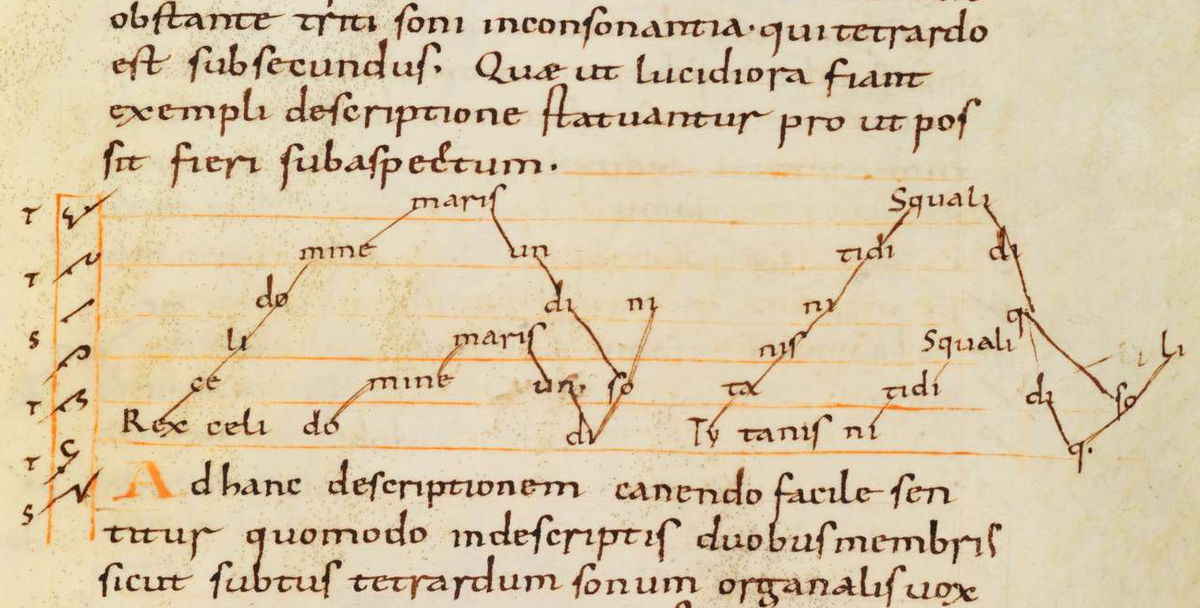
The famous organum example from the Musica Enchiriadis itself — organum at the fourth, with the boundary tone rule and oblique motion fully notated for both voices. The oldest written harmony in the Western tradition, ready to sing.
The treatise's own demonstration sequence: the same organum at the fourth sung from four different starting pitches. All four are notated so you can work through each transposition and hear how the boundary tone rule holds across the gamut.
Organum at the fourth applied to two chants your schola already knows. Sing these as written for two voices, or add voices doubling either part at the octave for the full composite texture the treatise describes — no extra notation needed.